

Private Shoulder MRI in Leeds: Rotator Cuff, Labrum & Shoulder Pain
The shoulder is the most mobile joint in the body, which is exactly why it is so easy to injure. MRI gives a detailed view of the rotator cuff tendons, labrum, cartilage, bursa and bone that X-ray and ultrasound cannot match.
This guide explains what a shoulder MRI shows, which shoulder problems it is commonly used to investigate, what to expect on the day, and how to arrange a private shoulder MRI in Leeds.

One joint. A lot that can go wrong.
The shoulder is really a group of joints and soft tissues working together: the ball-and-socket glenohumeral joint, the acromioclavicular (AC) joint at the top of the shoulder, the ring of cartilage called the labrum, and the four rotator cuff tendons that hold the ball in the socket and power movement.
Because so much of this is soft tissue, a plain X-ray often looks normal even when the shoulder is clearly not. MRI is the imaging test most commonly used to look at the tendons, labrum and cartilage in detail.
Put simply: a shoulder MRI shows the tendons, labrum, cartilage, bursa, bone and surrounding muscles of the shoulder in one examination, without any ionising radiation. It is the scan most often requested when shoulder pain, weakness or instability has not settled.
What can a shoulder MRI show?
What the radiologist looks for depends on the clinical question, but shoulder MRI is commonly used to assess three broad groups of problems.
Rotator cuff
The supraspinatus, infraspinatus, subscapularis and teres minor tendons. MRI can show partial or full-thickness tears, tendinopathy, calcific deposits, muscle wasting and the subacromial bursa that sits above the cuff.
Labrum and capsule
The labrum deepens the socket and anchors the ligaments that keep the shoulder in place. MRI can help identify labral tears, including those linked to dislocation, and SLAP-type injuries near the biceps anchor.
Joint surfaces and bone
Cartilage wear and arthritis in the glenohumeral or AC joint, bone bruising, stress injury, cysts and changes associated with frozen shoulder (adhesive capsulitis) can all be assessed on MRI.
When is a shoulder MRI usually recommended?
Most shoulder pain settles with time, activity modification and physiotherapy, and not every sore shoulder needs a scan. MRI tends to be requested when symptoms have persisted, when an injury was significant, or when the result would change the treatment plan.
Common reasons a GP, physiotherapist or consultant requests a shoulder MRI include:
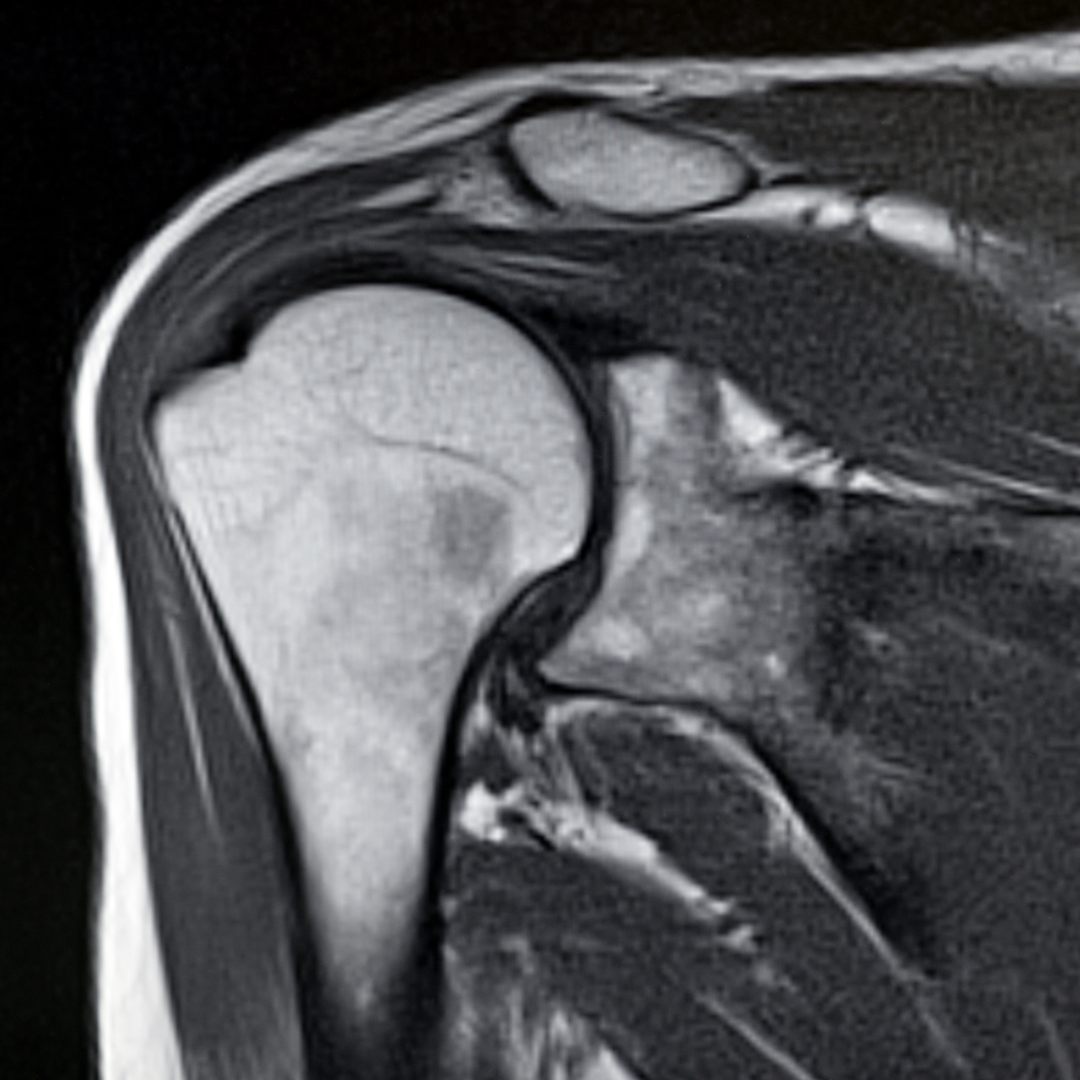
MRI for a suspected rotator cuff tear
The rotator cuff is the most common source of shoulder pain in adults. Tears range from small partial-thickness fraying, which is often managed without surgery, to full-thickness tears with retraction of the tendon.
MRI can show which tendon is involved, how large the tear is, whether the tendon has pulled back from the bone, and whether the muscle behind it has started to waste. These details help a specialist decide between physiotherapy, injection or surgical repair.
Ultrasound is also useful for the rotator cuff, but MRI gives a fuller picture of the joint, labrum and bone at the same time, which is why it is often preferred when the diagnosis is not clear.
How shoulder MRI compares with other imaging
Each test has a role. X-ray shows bone alignment, fractures and arthritis but very little soft tissue. Ultrasound is good for the rotator cuff and bursa and can be done in clinic, but it cannot see inside the joint or assess the labrum and cartilage well.
MRI uses a magnetic field and radio waves rather than radiation and provides detailed soft-tissue contrast across the whole shoulder in one examination.
Is MRI the right scan for your shoulder?
Symptoms alone do not always identify the correct test, and MRI findings need to be read alongside a clinical examination. These are common patterns where shoulder MRI is often considered.
Neck or shoulder? Pain felt in the shoulder sometimes comes from the neck, and nerve symptoms running down the arm may point to the cervical spine rather than the joint. If your clinician suspects a neck cause, a cervical spine MRI may be more appropriate than a shoulder scan, or both may be requested. If you are unsure, provide your referral or describe your symptoms when booking and our team will help you choose.
What happens during a shoulder MRI?
Before your scan you will complete MRI safety screening and the radiographer will confirm which shoulder is being examined and why.
You lie on your back on the scanner table with the arm by your side, usually palm facing up or slightly outwards. A small receiver coil is placed over the shoulder to capture detailed images, and the table moves into the scanner so that the shoulder sits in the centre of the magnet.
Most shoulder MRI examinations take around 20 to 30 minutes. The scanner makes loud knocking noises, so hearing protection is provided, and keeping the shoulder still is the single most important thing you can do for a clear result.
A standard shoulder MRI does not require an injection. Where a specialist specifically requests an MR arthrogram (contrast injected into the joint), a referral is needed and this is arranged separately.

Shoulder MRI without ionising X-ray radiation
MRI uses a strong magnetic field rather than X-rays, so it is safe to repeat and suitable for most people. Because of the magnet, safety screening is essential before every scan.
Tell the imaging team about any implanted device, previous shoulder surgery or metalwork, metal fragments, or other relevant medical history. Previous shoulder surgery does not usually prevent a scan, but the team needs to know. Read our full guide to MRI safety, implants and claustrophobia before you book.
Can you self-refer for a private shoulder MRI?
New Horizons Imaging offers a self-referral pathway for selected non-emergency musculoskeletal MRI examinations, including shoulder MRI, for adults aged 18 and over. Every request is reviewed by our clinical team before the scan is confirmed.
If you already have a referral from a GP, physiotherapist or consultant, upload it when you book. Patients under 18 always require a clinician referral — find out how to get one here.
Shoulder MRI at Headingley, Leeds
New Horizons Imaging provides private shoulder MRI scanning from AMT Headingley Rugby Stadium in Leeds on a Siemens wide-bore scanner, with free on-site parking and appointments often available within days.
A dedicated shoulder MRI is booked as a single body-area scan. Current prices are listed on our MRI Services & Prices page, and you can read more about what a private MRI costs and how long a scan takes before you book.
Patients travel to our Leeds MRI centre from across Yorkshire, including Bradford, Huddersfield, Sheffield, Halifax, Doncaster and York.
A routine private MRI appointment is not an alternative to emergency care. A shoulder that is visibly deformed after an injury, severe pain with a hot swollen joint and fever, sudden complete loss of movement, or arm pain with chest pain, breathlessness or sweating should be assessed urgently rather than waiting for a routine scan.
Explore joint and sports MRI at New Horizons Imaging
Shoulder injuries are common in contact and overhead sports. Our sports injury MRI guide explains how fast imaging fits into recovery planning, and our private knee MRI guide covers the other joint we are most often asked about.
View our MRI Services & Pricing page for current scan options, or visit Areas We Serve if you are travelling into Leeds.
Unsure whether you need a shoulder or neck scan? Contact the New Horizons Imaging team before booking.
Frequently asked questions about shoulder MRI
What does a shoulder MRI show?
A shoulder MRI shows the rotator cuff tendons and muscles, the labrum and joint capsule, articular cartilage, the subacromial bursa, the biceps tendon, the AC joint and the bone, including bruising and cysts. It is the most complete single imaging test for shoulder pain.
Can a shoulder MRI show a rotator cuff tear?
Yes. MRI is commonly used to confirm a rotator cuff tear, show which tendon is affected, whether the tear is partial or full-thickness, and whether the tendon has retracted or the muscle has wasted.
How long does a shoulder MRI take?
Most shoulder MRI examinations take around 20 to 30 minutes of scanning. Allow extra time for safety screening and preparation. See our guide on how long an MRI scan takes for more detail.
Do I need an injection for a shoulder MRI?
No. A standard shoulder MRI is non-invasive and needs no injection. An MR arthrogram, where contrast is injected into the joint, is a separate specialist examination that requires a clinician referral.
Is MRI better than ultrasound for the shoulder?
Ultrasound is good for the rotator cuff and bursa, but MRI also shows the labrum, cartilage, bone and deeper structures in one examination. MRI is usually preferred when the diagnosis is unclear or instability is suspected.
Can I self-refer for a private shoulder MRI?
Adults aged 18 and over can self-refer for a shoulder MRI at New Horizons Imaging, subject to clinical review. Patients under 18 require a referral from a registered healthcare professional.
How much does a private shoulder MRI cost in Leeds?
A shoulder MRI is booked as a single body-area scan. Current prices, including reporting upgrades, are listed on our MRI Services & Prices page.
Where does New Horizons Imaging perform shoulder MRI scans?
New Horizons Imaging provides private MRI scanning from AMT Headingley Rugby Stadium, St Michael's Lane, Headingley, Leeds LS6 3BR, with free on-site parking.
Shoulder pain that won't settle? Get a clear answer in days.
If you know you need a shoulder MRI, you can begin your booking online now. If you are unsure whether the problem is the shoulder or the neck, send us your referral or symptoms and our clinical team will confirm the right examination.